
Choosing your kitchen equipment involves balancing durability, materials, and actual use. Rather than listing dozens of utensils, this article compares the criteria that make a difference in daily life: thermal conductivity, compatibility with cooktops, longevity, and, recently, compliance with European regulations on reparability and chemical substances.
Thermal conductivity and materials: how your pan affects your plate
The material of a pan or pot determines cooking consistency far more than the brand or displayed price. Two criteria allow for a quick decision: the speed of temperature rise and the uniformity of heat across the entire surface.
| Material | Temperature Rise | Heat Distribution | Induction Compatibility | Maintenance |
|---|---|---|---|---|
| Stainless Steel 18/10 | Medium | Uneven without sandwich base | Yes (if magnetic base) | Easy, dishwasher safe |
| Cast Iron | Slow | Excellent once hot | Yes | Immediate drying, regular oiling |
| Aluminum | Fast | Good | No (except induction base) | Scratch sensitive |
| Copper | Very fast | Excellent | No | Frequent polishing |
| Carbon Steel | Fast | Good | Yes | Seasoning required |
Cast iron excels for stews and long cooking due to its thermal inertia. However, for quickly searing a piece of meat or sautéing vegetables, carbon steel offers significantly better responsiveness.
A detail often overlooked: a stainless steel-aluminum-stainless steel sandwich base corrects the main flaw of stainless steel alone, namely hot spots. Checking for this multilayer base before purchasing can prevent many disappointments.
To explore bakeware equipment on Gourmandel, this type of material comparison helps target the pieces that truly match your usual preparations.
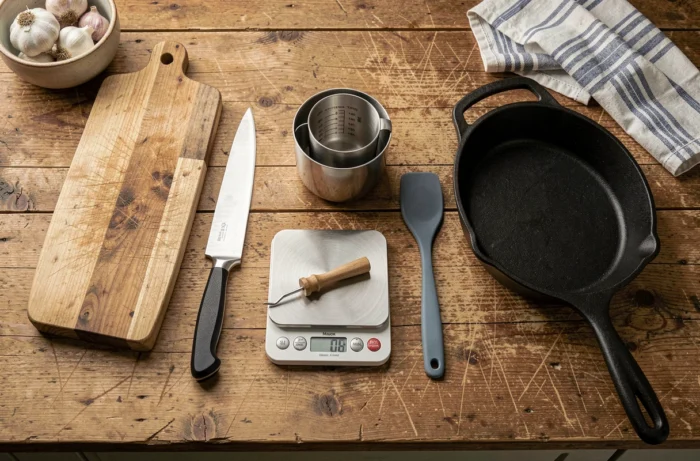
PFAS Regulation and Non-Stick Coatings: a purchase criterion to watch
PTFE (Teflon) non-stick coatings are at the center of a regulatory debate that directly affects the choice of utensils. Sweden has adopted a ban on PFAS in kitchen utensils, effective in 2026. France is also considering restrictions on these substances, classified as “forever chemicals” due to their persistence in the environment.
PFAS-free alternatives are rapidly advancing in the market: ceramic, enameled cast iron, seasoned carbon steel. Each has its limitations (ceramic loses its non-stick properties faster, cast iron requires specific maintenance), but none pose the same health concerns.
For a sustainable purchase, checking whether the coating contains PFAS has become a relevant reflex. Manufacturers who focus on PFAS-free ranges explicitly mention it on the packaging or product sheet.
Right to Repair: choosing a kitchen appliance that lasts
Since July 31, 2026, the European Union has imposed a new framework on the reparability of household appliances. This regulation guarantees a right to repair with access to reasonably priced spare parts and the technical information necessary to repair rather than replace.
This change alters the purchasing logic for small kitchen appliances (food processors, blenders, mixers). Buying an appliance with available and documented parts is cheaper over five or ten years than opting for a low-end model without after-sales support.
European consumers are now placing increasing importance on the expected lifespan of appliances. The logic of “buying for longevity” is clearly gaining traction in the home appliance sector, as reported by the specialized press in August 2026.
- Check the announced availability of spare parts (blade, seal, motor shaft) before purchasing
- Favor brands that publish accessible repair manuals online
- Compare the cost of a replacement part to the price of a new appliance to estimate real profitability
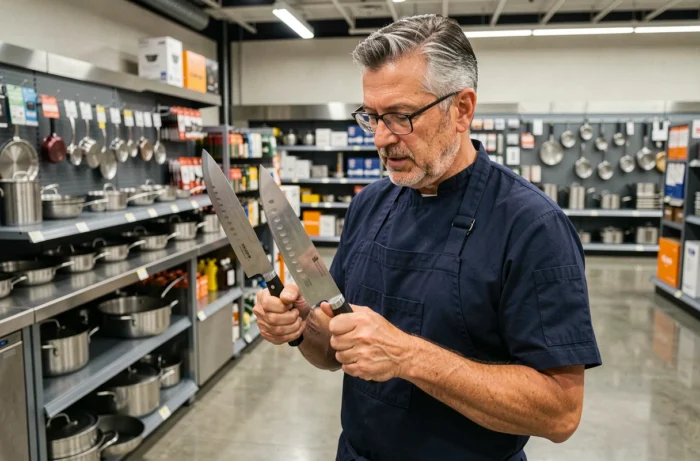
Scale, molds, and small pastry equipment: where to focus the budget
In pastry, a precision scale is the only tool that guarantees the reproducibility of a recipe. A difference of a few grams in flour or butter is enough to alter the texture of a dough. Scales that can switch between grams and centiliters reduce conversion errors, a point highlighted by several specialized guides.
For molds, the material measurably affects the baking result. A steel mold conducts heat better than a silicone mold, resulting in a more pronounced crust. Conversely, silicone facilitates unmolding and is better suited for delicate preparations like financiers or madeleines.
- Coated steel mold: even baking, golden crust, sometimes more demanding cleaning
- Food-grade silicone mold: easy unmolding, slower baking, check compliance with European food standards
- Tin mold: inexpensive, possible rust without immediate drying, suitable for tarts and quiches
Focusing the budget on a reliable scale and two or three versatile molds covers the majority of common sweet recipes. Highly specialized accessories (piping tips, cake rings) are only justified with regular practice.
Summary of selection criteria for durable kitchen equipment
The choice of kitchen equipment is based on three verifiable axes: the material suited to the type of cooking practiced, the compliance of the coating with regulatory developments on PFAS, and the actual reparability of the appliance under the European right that came into effect in mid-2026. A well-chosen utensil based on these three criteria remains functional well beyond its warranty period.
The purchase price does not always reflect the actual cost over time. A carbon steel or cast iron pan, properly maintained, lasts for years without performance loss, whereas a low-end non-stick coating requires replacement every two to three years.