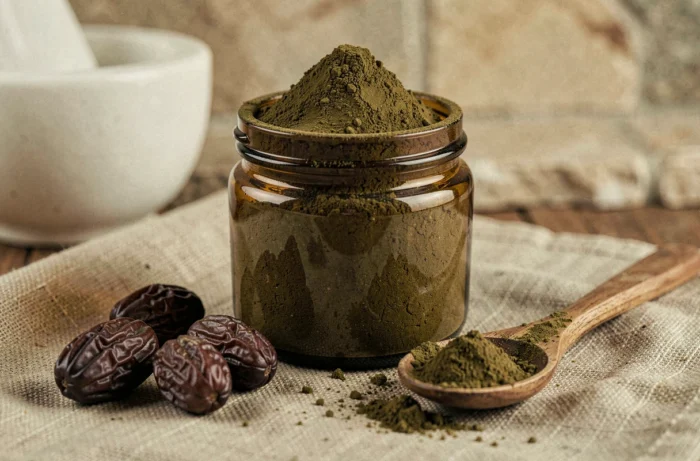
Haritaki (Terminalia chebula) is one of the pillars of Ayurvedic pharmacopoeia. Present in the traditional triphala formula, this small dried fruit is praised for its digestive and antioxidant properties. Its growing popularity in Europe in the form of powder or capsules comes with a blind spot: the side effects remain poorly documented by Western clinical research, making caution all the more necessary.
Haritaki and drug interactions: a clinical gray area
Are you taking treatment for diabetes or an anticoagulant? The question of interactions with haritaki deserves special attention. Studies conducted in vitro and on animal models suggest a hypoglycemic effect of Terminalia chebula. In practice, this means that simultaneous intake with metformin or another oral antidiabetic could amplify the drop in blood sugar.
The problem is that no robust clinical trial in humans confirms or quantifies this risk. We face a plausible pharmacological signal, but without reliable data to adjust a dosage or assess the severity of an interaction.
The same uncertainty looms over anticoagulants. Some compounds in haritaki (tannins, gallic acid) have biological activity that could modify platelet aggregation. Before any supplementation, consulting with a doctor or pharmacist remains the only reasonable approach, especially for individuals on chronic treatment. It is better to understand the dangers and side effects of haritaki before incorporating this plant into your routine.

Laxative effect of haritaki: the underestimated danger of dehydration
Most users are aware of the laxative action of haritaki. This is often the reason they are interested in it: to improve transit, relieve occasional constipation. What is less measured is the rapid shift to real discomfort when the dose increases.
High or prolonged doses lead to diarrhea, cramps, and loss of fluids. This is not trivial. In an elderly person, fragile or already prone to dehydration, the effect can manifest as marked weakness, dizziness, or even an electrolyte imbalance requiring management.
The risk also increases when haritaki is combined with other laxative plants (senna, psyllium) or consumed alongside a low-fiber and low-water diet. The body then lacks the resources to compensate for fluid losses.
Warning signs to watch for
- Repeated liquid stools over several days, a sign that the dose exceeds individual tolerance
- Persistent abdominal cramps after intake, indicating irritation of the digestive tract
- Intense thirst or dark urine, early markers of dehydration
- Unusual fatigue or dizziness, especially in individuals already on diuretics
Reducing the dose or suspending consumption usually suffices to make these symptoms disappear. Stopping should be immediate if diarrhea persists beyond two days.
Pregnancy, breastfeeding, and haritaki: the absence of data is not a guarantee
It is sometimes stated that haritaki is “safe” during pregnancy because it is a traditional plant. This reasoning reverses the burden of proof. No clinical trial has evaluated the safety of haritaki in pregnant or breastfeeding women. The absence of data simply means we do not know, not that the risk is zero.
In traditional Ayurvedic medicine, haritaki is used with specific precautions according to constitutions (doshas) and life stages. Transposing an ancestral use guided by a trained practitioner to free self-medication via capsules purchased online is not equivalent.
For pregnant or breastfeeding women, the most cautious recommendation remains abstention, unless explicitly advised by a healthcare professional.

Heavy metal contamination: a risk linked to product quality
This danger does not concern haritaki itself, but the supply chain that markets it. Ayurvedic herbal supplements are regularly subject to health alerts related to the presence of heavy metals (lead, mercury, arsenic).
The problem arises from cultivation, drying, and packaging, not from the molecule. Contaminated soil, outdoor drying in a polluted area, or packaging in non-certified facilities are enough to render a batch unfit for consumption.
How to limit this risk in practice
- Prefer products accompanied by a certificate of analysis (COA) indicating heavy metal levels
- Check that the European supplier relies on tests conducted by an independent third-party laboratory
- Beware of bulk powders sold without traceability or mention of the country of processing
A third-party certificate of analysis remains the only reliable quality indicator for a consumer who cannot analyze the product themselves. Labels like “organic” or “natural” on the packaging do not guarantee the absence of contaminants.
Dosage of haritaki: why self-medication poses a problem
The difficulty with haritaki is the absence of a standardized dosage validated by European health authorities. Dosages vary considerably from one manufacturer to another, from one tradition to another. A spoonful of powder in warm water in the morning does not have the same impact as a concentrated capsule taken three times a day.
This variability makes self-medication risky. Without a solid clinical reference, each user becomes their own guinea pig, with an increased risk of overdose or uncontrolled digestive effects.
Haritaki remains a plant with interesting properties, documented by a long Ayurvedic tradition. Its current limitations are less about the plant itself than about the lack of rigorous clinical data and the very uneven quality of products available on the European market. Consulting a healthcare professional before any prolonged use is not an excessive precaution; it is the only coherent approach in the face of these uncertainties.