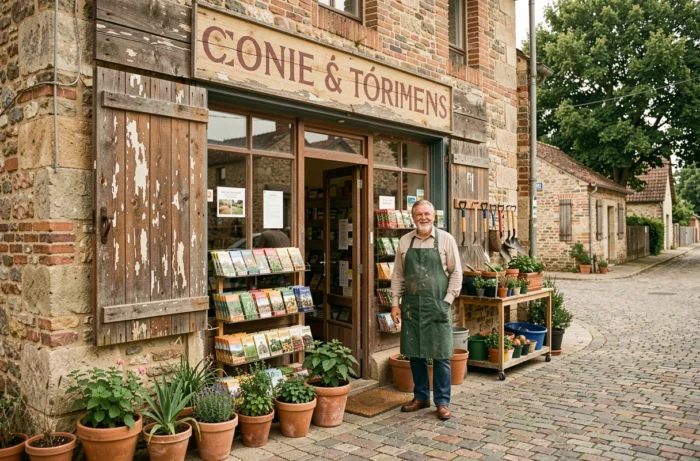
Gamm Vert is today the leading French network of garden centers, with over a thousand points of sale spread across the territory. Its name is familiar to amateur gardeners as well as rural residents who have frequented these stores for decades. However, the brand has not always carried this name, and its history has roots in the agricultural world long before gardening for the general public became a mass market.
Before Gamm Vert: the role of agricultural supply cooperatives
The story begins far from the shelves of potting soil and tomato plants. In the immediate post-war period, farmers facing shortages organized themselves into supply cooperatives to pool their purchases of seeds, fertilizers, and equipment. These local structures, such as the Agricultural Purchasing Cooperative of the Lunel canton (COPAL) founded in 1945, were initially aimed only at agricultural professionals.
In 1968, several of these cooperatives joined the UNCAA (National Union of Agricultural Supply Cooperatives), a purchasing center that would later become InVivo. This grouping gave them negotiating power and a common logistics framework. Tracing the origin of the Gamm Vert franchise leads back to this cooperative foundation, as it was from this agricultural organization that the idea of selling to individuals was born.
The legislative turning point came in 1972: a law allowed agricultural cooperatives to market their products to the general public. The group seized this opportunity and created the commercial brand that would become Gamm Vert. The brand was officially launched in 1977 under the impetus of the InVivo group.
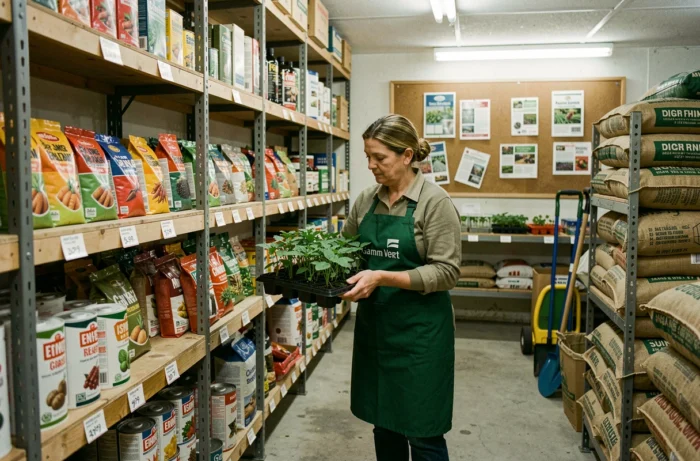
Gamm Vert and its former name: what local designations conceal
Unlike a classic franchise where each store strictly carries the same legal name, Gamm Vert is based on a network of local cooperative societies that often retain their own social designation. This is a direct legacy of the founding agricultural model.
The COPAL of Lunel, for example, has become “COPAL Gamm Vert” without abandoning its original identity. Other structures bear names like Nati Vert or Green Val, distinct legal entities that operate stores under the Gamm Vert brand. This functioning explains why, in some regions, residents knew their store by the name of the local cooperative before it displayed the national brand.
This dual level of naming, national commercial name and local cooperative social reason, sometimes blurs the understanding. The former name of Gamm Vert varies according to the original cooperative of each store. There is not a single “former name” of the brand, but a mosaic of cooperatives that gradually adopted the Gamm Vert brand as a common showcase from the late 1970s.
From agricultural cooperative to TERACT network: strategic repositioning
For nearly forty years, Gamm Vert grew as the public-facing branch of agricultural cooperatives. The transition to franchising, initiated in 1986, accelerated territorial coverage. The brand has retained its rural DNA: stores often located on the outskirts of small towns, offering a mix of gardening, pet supplies, local products, and tools.
The recent transformation is of a different nature. Gamm Vert is now part of the TERACT network, the distribution platform created by InVivo to consolidate its retail activities. TERACT brings together several gardening brands under one umbrella, including Jardiland and Delbard, as well as food distribution activities like Boulangerie Louise or Frais d’Ici.
This merger changes the competitive landscape. Gamm Vert, Jardiland, and Delbard, once direct competitors, now coexist within the same group. The synergies focus on purchasing, logistics, and the development of private labels. However, each brand maintains its positioning: Gamm Vert remains rooted in rural and peri-urban areas, while Jardiland targets urban areas more.
What TERACT changes for Gamm Vert stores
The integration into TERACT has concrete consequences for local operators:
- Purchasing centers are pooled among the group’s brands, altering the supply conditions for plants, pet products, and gardening items.
- Gamm Vert stores can now offer ranges from other brands in the network, particularly in food with local products.
- Digital development (e-commerce site, click and collect) benefits from group investments rather than just local cooperative resources.
This evolution raises a question that the available data does not fully resolve: does the historical cooperative model withstand integration into a multi-brand group structured around more conventional profitability logic?
Gamm Vert facing competing garden centers: a unique rural positioning
In the French garden center market, Gamm Vert occupies a distinct place. While Truffaut focuses on showcase stores in urban areas and Jardiland (now in the same group) targets medium-sized urban areas, Gamm Vert remains the most established network in rural areas.
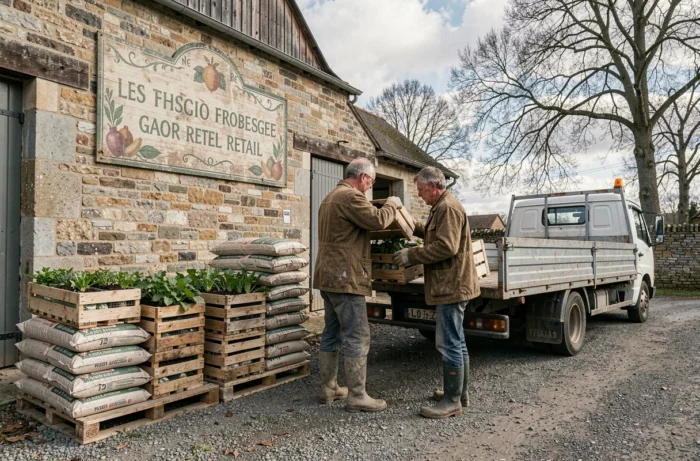
This presence is not the result of a marketing strategy: it stems directly from the cooperative heritage. Stores opened where agricultural cooperatives already existed, that is, in towns and small cities. This dense network often makes it the only accessible garden center within a radius of several dozen kilometers.
The flip side of this coin is an image sometimes perceived as less “trendy” than that of urban competitors. Stores vary significantly in size and layout, from a small outlet attached to a grain silo to a large modernized store. This heterogeneity is the hallmark of a network built by aggregating cooperatives, not by duplicating a unique concept.
The brand has been voted “Favorite Brand of the French” in its category and received the Vasano 2025 award for the best Google rating, suggesting that proximity and in-store advice compensate, in the eyes of customers, for the differences in presentation between outlets.
The story of Gamm Vert remains that of a network born from agricultural pragmatism, not from a franchise concept devised in a design office. Its former name, or rather its former names, belong to dozens of local cooperatives that chose, starting in 1977, to federate under a common banner. This particularity continues to shape the brand, even in its recent integration within TERACT.