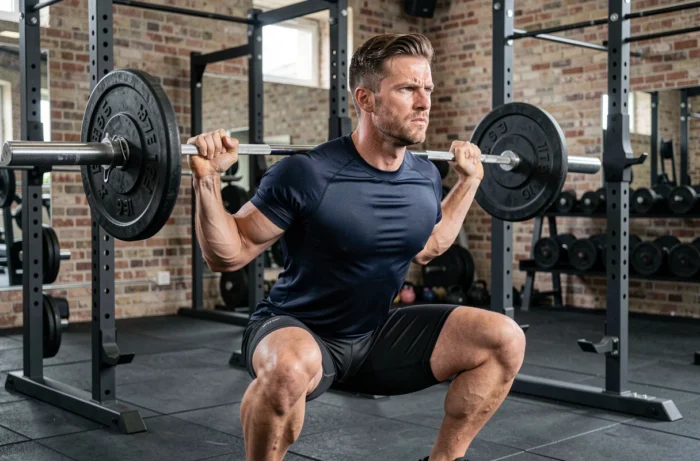
An effective workout session relies on three measurable parameters: the choice of exercises, the management of training volume, and the recovery time between sets. These three variables determine almost all results, whether the goal is muscle gain, endurance improvement, or fat loss. Understanding their interaction before stepping into a gym can prevent months of stagnation.
Cost and access to gyms in France: an underestimated barrier
Bodybuilding guides detail exercises and programs but overlook a crucial factor: private sports practice is becoming more expensive and less accessible. The trend observed in recent years shows a clear shift from the federal model to private structures (gyms, CrossFit boxes, padel studios), with monthly subscriptions weighing on the budget.
This shift towards individual practice offers more flexibility (a la carte sessions, extended hours), but it also deepens access inequalities. Therefore, before choosing a program, one must evaluate the realistic frequency of workouts based on budget and the geographical proximity of facilities.
To structure a workout session for men in France, the first instinct is to identify locally available resources: private gym, municipal gym, equipped park, or simply a home space. The most sophisticated program is useless if the material conditions prevent regular adherence.
Training volume and intensity: calibrating your weightlifting session

Training volume refers to the total number of sets performed per muscle group over a week. Intensity, on the other hand, is measured by the weight lifted relative to maximum capacity, often expressed in RPE (Rating of Perceived Exertion), a subjective difficulty scale ranging from 1 to 10.
These two variables function in balance. Increasing volume (more sets) requires reducing relative intensity to remain recoverable. Conversely, working at high intensity (RPE 8-9) necessitates limiting the number of sets to avoid overtraining.
Concrete distribution for three weekly sessions
Three sessions per week represent the most viable format for someone working full-time. Here’s a structure that covers the entire body without multiplying exercises:
- Session A (upper body, push): bench press or dumbbell press, shoulder press, dips or tricep extensions – 3 to 4 sets per exercise, aiming for an RPE of 7 to 8.
- Session B (lower body): squat or leg press, Romanian deadlift, lunges or leg curl – same structure of sets, adjusting the load to maintain proper technique.
- Session C (upper body, pull): pull-ups or vertical pull, barbell or dumbbell rowing, bicep curls – back muscles can tolerate a slightly higher volume, 4 sets per movement remain manageable.
Three exercises per session are enough to progress for several months. Adding a fourth isolation movement (calves, forearms, abs) is optional and should not extend the session beyond one hour.
Recovery between sets: the parameter most practitioners neglect
The rest time between two sets directly influences the quality of muscular work. Too short, it prevents maintaining the load. Too long, it cools down the nervous system and unnecessarily prolongs the session.
For heavy compound exercises (squat, deadlift, bench press), a rest of two to three minutes allows for the restoration of phosphocreatine stores and maintains performance from one set to another. For isolation exercises (curls, extensions, lateral raises), 60 to 90 seconds of rest produce sufficient metabolic stress without prolonging the session.
A timer remains the best tool to respect these intervals. Without timing, most practitioners underestimate their rest time on light movements and overestimate it on heavy movements.
Warm-up and injury prevention: progressive sets

Warming up is not just about running for ten minutes on a treadmill. For a weightlifting session, the most effective method relies on progressive sets: performing the first exercise of the session with increasing weight before reaching the working load.
For example, if the target load for the squat corresponds to an RPE of 7-8, first perform a set with no weight (bar only), then a set with light weight, followed by a set with intermediate weight. Each progressive set counts for 5 to 8 repetitions. This protocol prepares the joints, raises local muscle temperature, and calibrates the motor pattern of the movement.
This approach reduces the risk of injury much more effectively than a general cardiovascular warm-up because it precisely replicates the movement that will be performed under load.
Adapting frequency according to lifestyle in France
Recent barometers on sports practice show that nearly half of the French population reports weekly physical activity, a level that has been steadily increasing for several years. Men and women now achieve comparable participation rates, which invalidates the idea of a sport that is structurally more masculine.
This data has a practical implication: gyms are more crowded, peak times (noon, 6 PM-8 PM) are more saturated. Planning workouts outside of these peaks, when possible, improves training quality (access to equipment, less waiting between stations).
A program of three sessions remains the most realistic foundation. Moving to four or five sessions only makes sense if sleep, nutrition, and professional stress levels allow for sufficient recovery. Consistency over several months matters more than intensity over two weeks. A practitioner who maintains three sessions per week for six months will progress more than another who pushes through five sessions for three weeks before giving up.